Analog Algorithm. Vinyl cover design
Details
- Client
- Fogpanique
- Category
- Packaging
- Created
- 2020
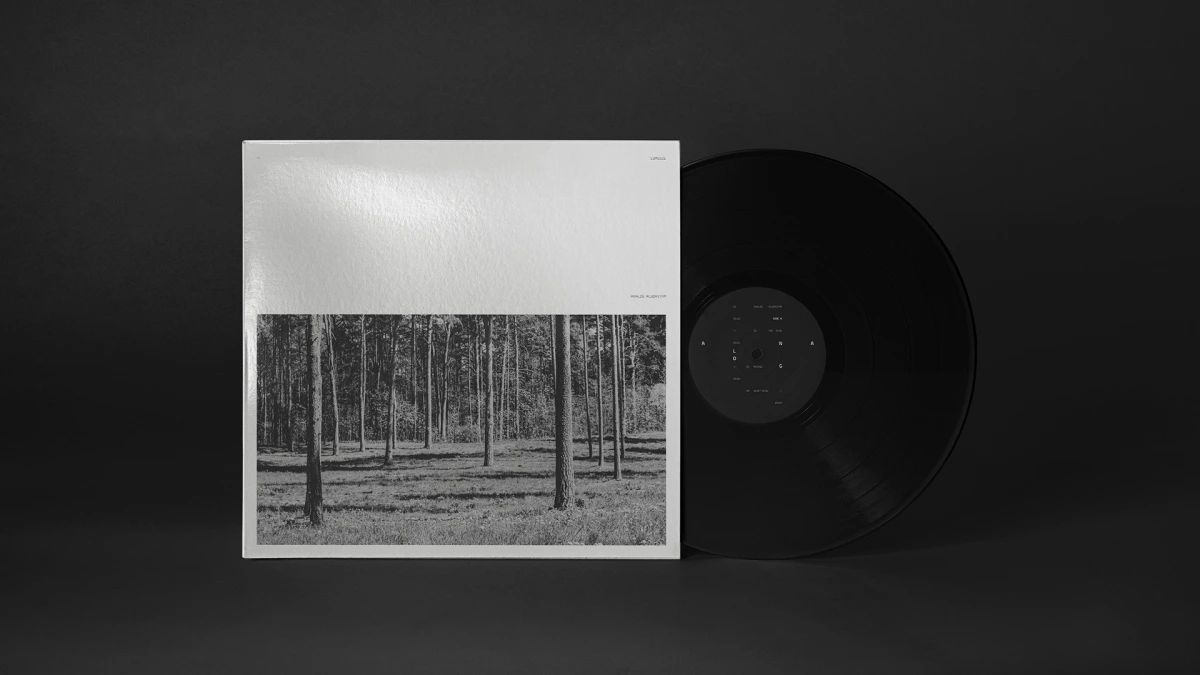
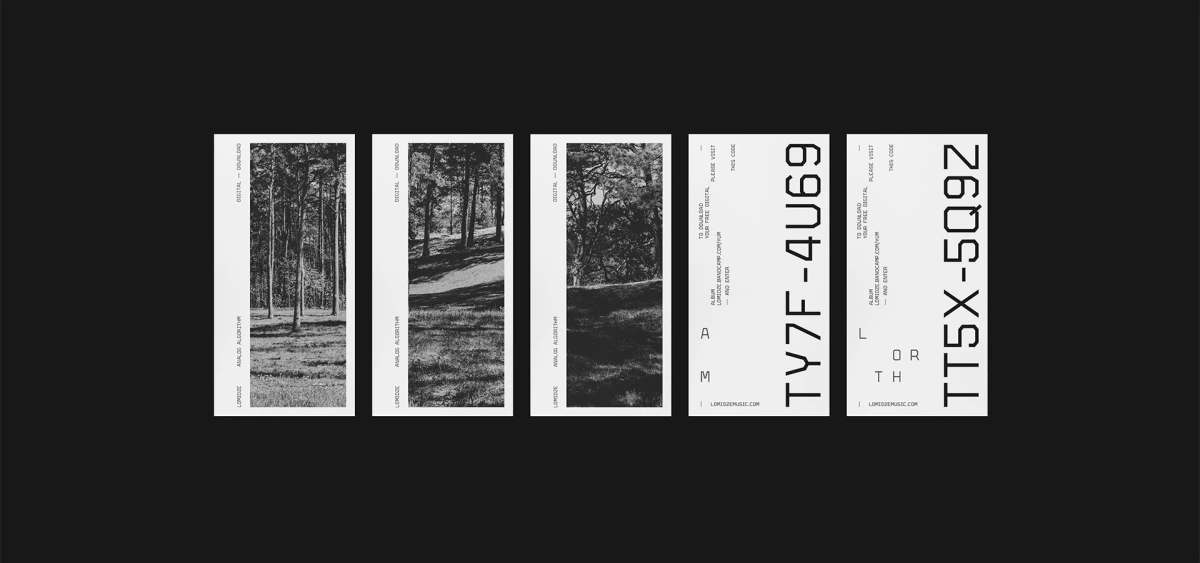
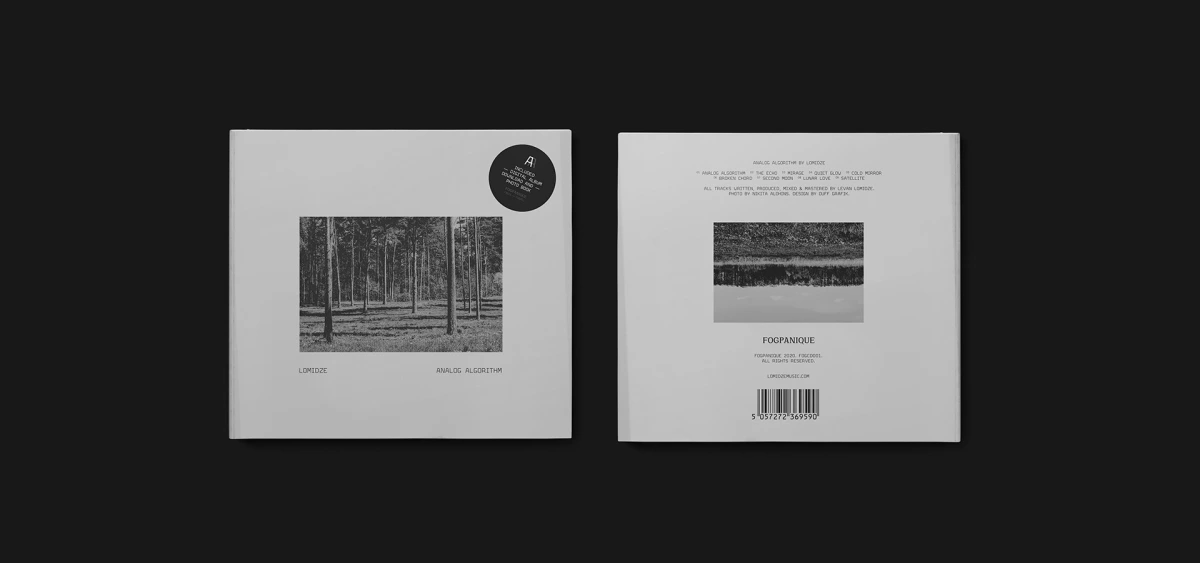
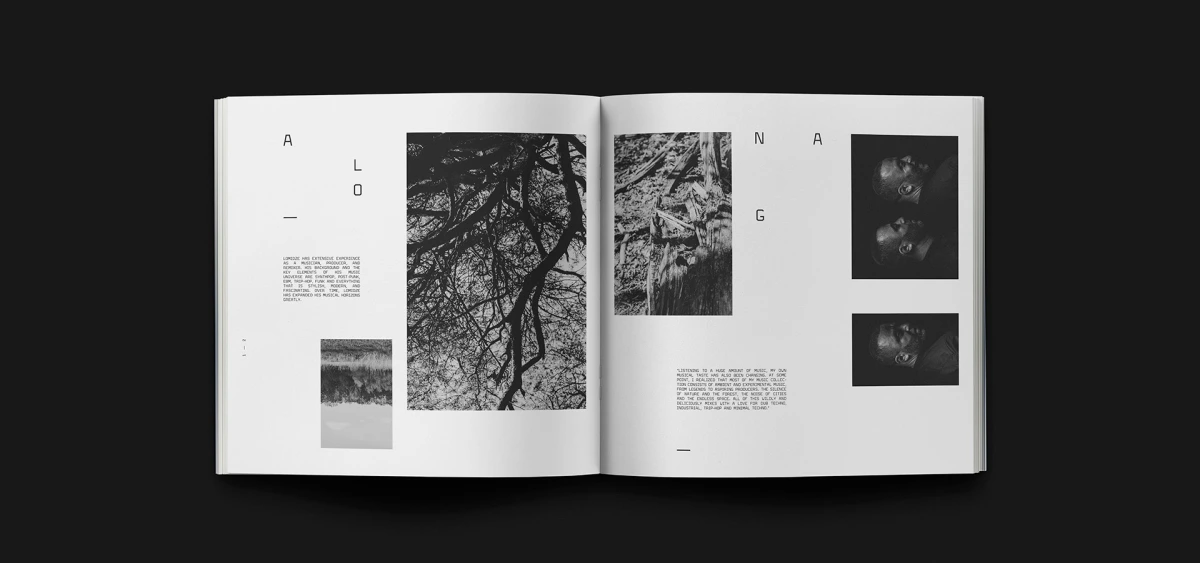
Analog Algorithm is the album Lomidze recorded in his home studio in Riga. It came out on the label Fogpanique as a limited edition 12-inch black vinyl with seven tracks, a photo book and a digital download. Ouff Grafik designed the album cover, the record label, the book and the download cards.
After years of listening, Lomidze says, most of his collection is now ambient and experimental music, from legends to aspiring producers. The silence of the forest, the noise of cities and endless space mix with his love for dub techno, industrial, trip-hop and minimal techno.
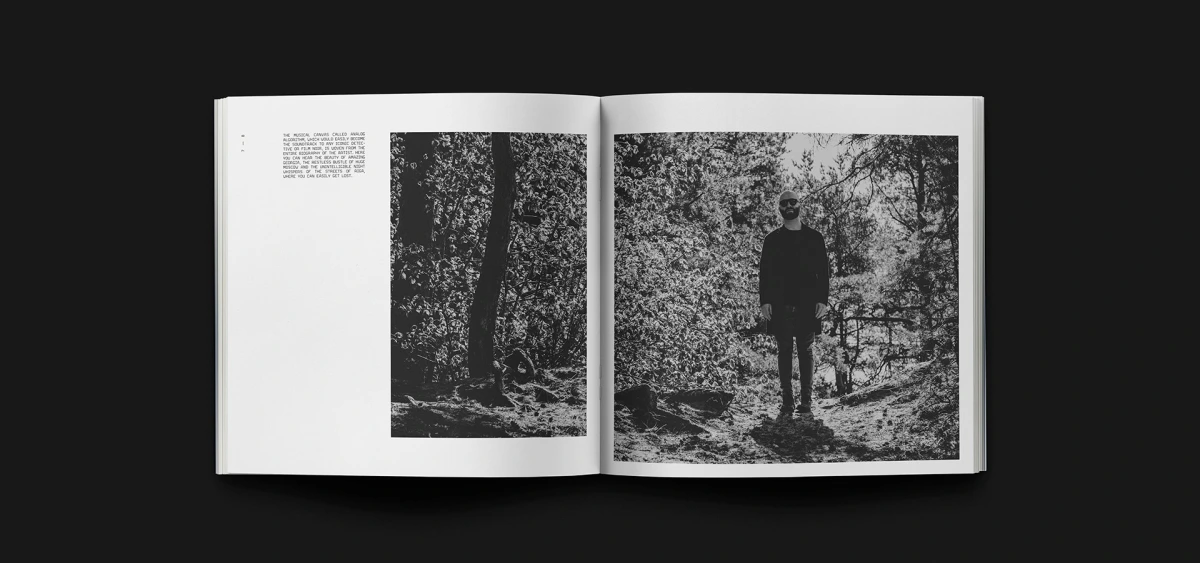
The record is diverse and cinematic. Trembling and paranoid vibrations give way to the rainbow after the rain, alien signals to nostalgic synth disco, industrial noise to natural motifs, anxiety to home comfort. Crackles and clicks in the spirit of Aphex Twin sit next to sound design in the style of Alan Wilder. It could be the soundtrack to a film noir, and it is woven from the artist’s own route: the beauty of Georgia, the bustle of Moscow and the night whispers of the streets of Riga.
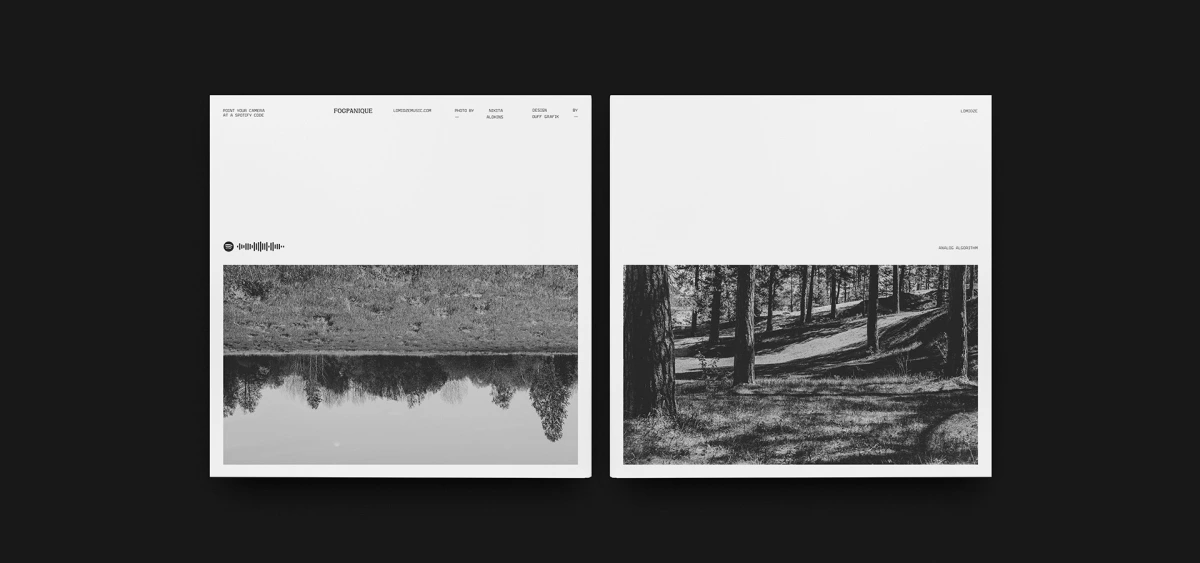
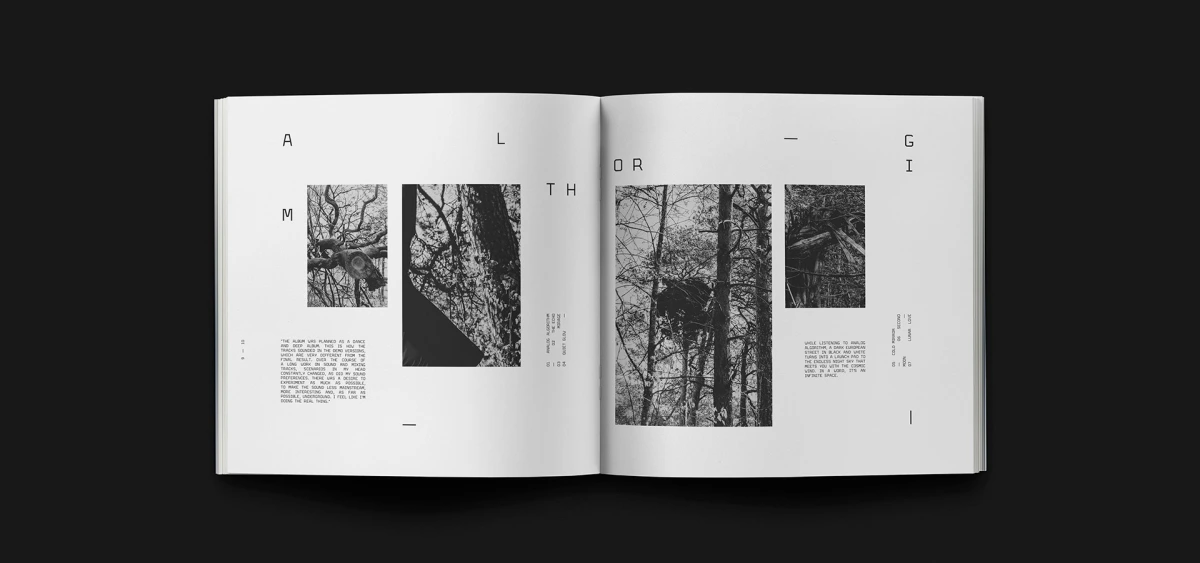
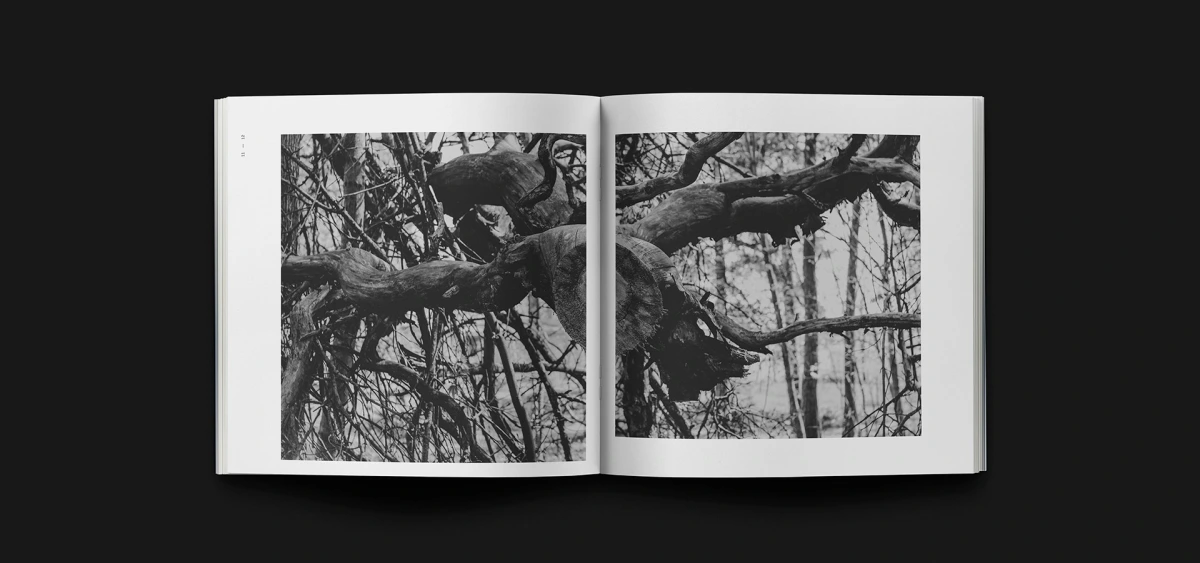
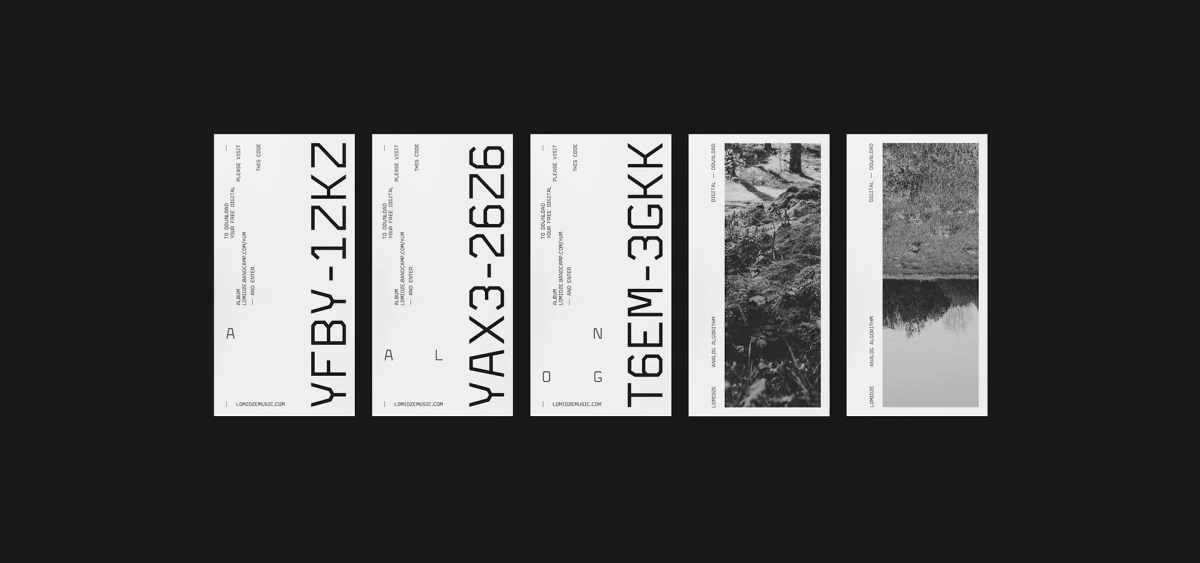
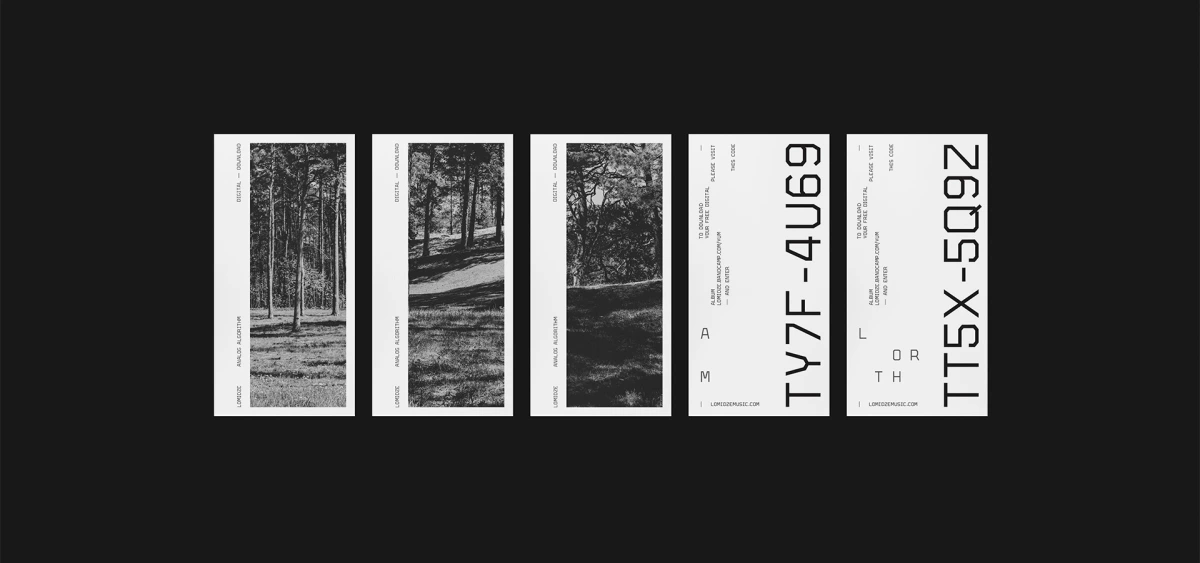
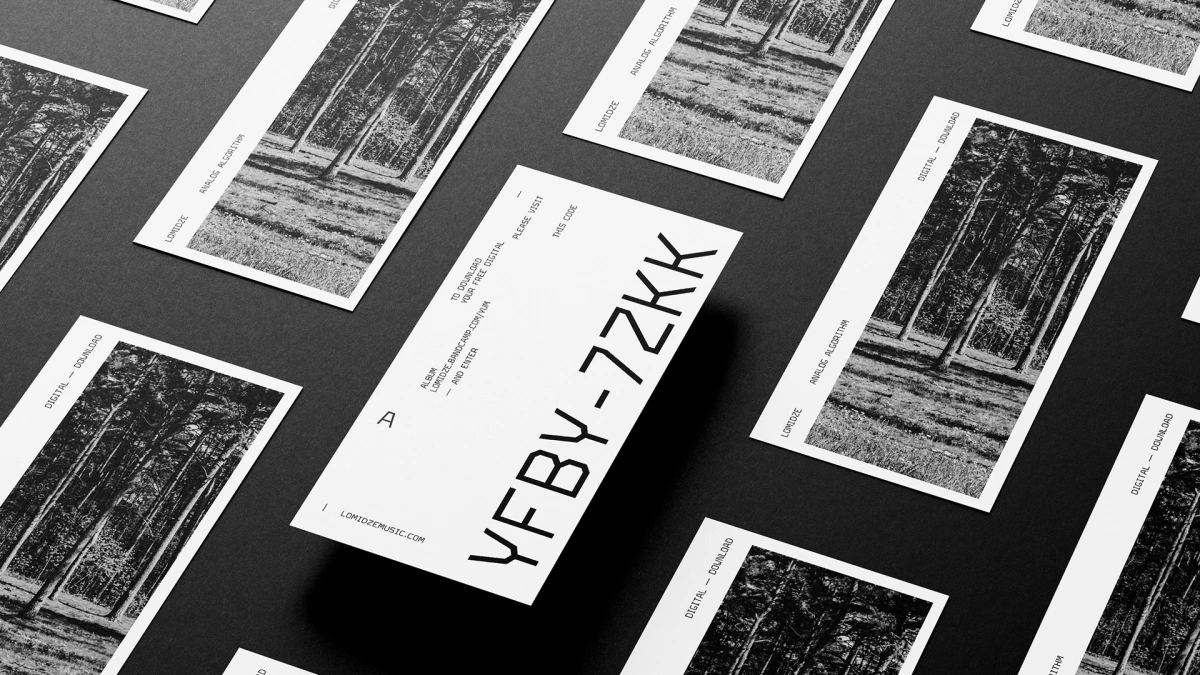
The sleeve is white, with a black and white forest photograph set low in the frame and the upper half left empty. The type is small and monospaced. The black record has a black label with scattered letters. The photo book repeats the forest on its cover and shows a lake on the back, and five download cards carry forest photographs or the code in large monospaced capitals.
01 — 03
Lomidze is a musician, producer and remixer. Synthpop, post-punk, EBM, trip-hop, funk and everything stylish and modern are the key elements of his music universe, and over time his horizons have grown wide.
A forest photograph on white
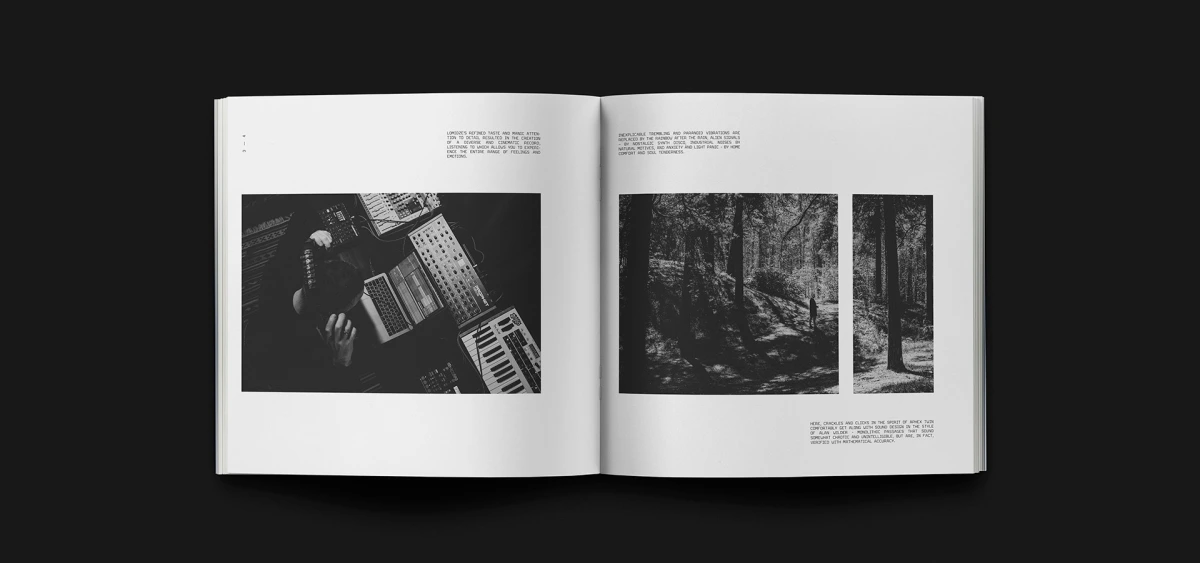
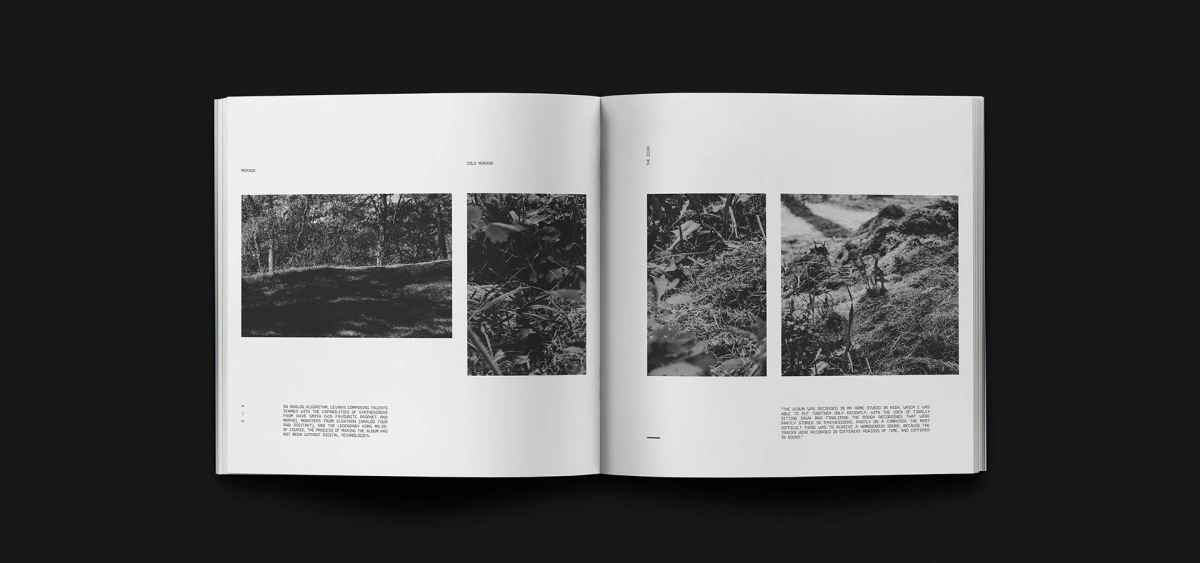
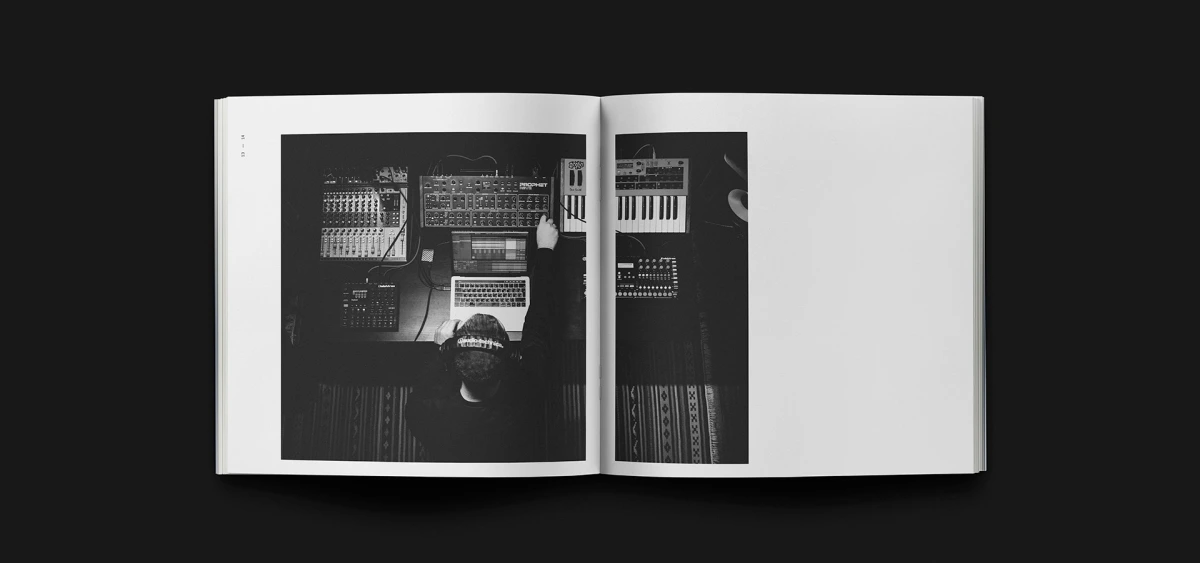
The album was recorded in Lomidze’s home studio, which he had only just put together, to finish rough recordings kept partly in synthesizers and partly on a computer. The hardest part was a homogeneous sound, because the tracks were made at different times. The voices come from Dave Smith synthesizers (his favourite Prophet and Mopho), Elektron’s Analog Four and Digitakt and the Korg MS-20, with Ableton Live, Logic and plug-ins from Soundtoys, IK Multimedia, FabFilter and Audio Damage.
It was planned as a dance and deep album, and the demos sounded very different. Long work on sound and mixing changed the plans, and the wish grew to experiment, to be less mainstream and more underground. Some passages sound chaotic, but they are verified with mathematical accuracy. “I feel like I’m doing the real thing.”